

There’s no denying that today’s modern consumer is incessantly connected to their phones. So it should come as no surprise that SMS messaging enables brands like yours to communicate with your customers simply and immediately, on the device consumers pick up to check 205 times a day.
From growing a mobile audience quickly to reducing friction in the customer experience, keep reading to learn how SMS keywords can help you achieve all of this and more.
What Are SMS Keywords?
An SMS keyword is a short word or phrase (e.g. JOIN) that consumers text to a certain number from their mobile phones to initiate a mobile-based interaction with your brand. For example, consumers might text an SMS keyword to a number to sign up for your company’s SMS text message program or to request a certain piece of information, like a digital coupon.
How Do Text Keywords Work?
Here are the basic steps for how text keywords work for formal brand-to-consumer SMS communication.
- SMS keyword campaign setup: Every text keyword is set up by - or on behalf of - a company in an SMS aggregator platform as its own campaign, linked to a certain number like a short code or a 10-digit long code, or 10DLC. Once set up, the company can begin promoting the text keyword to consumers.
- Consumer-initiated interaction: A consumer starts the interaction with a company by texting a keyword (e.g. ALERTS) on their mobile device to the company’s short code or 10DLC.
- Automated SMS response: The platform automatically responds with a pre-programmed message containing what the consumer initially requested, such as program sign-up confirmation, a digital coupon, or a link to more information.
How Is Keyword Texting Commonly Used?
There are a variety of ways that you can use keyword texting to engage with consumers to drive your business. Here are some of the most common uses of text keywords.
Signing up to receive recurring SMS marketing messages.
SMS can be the vehicle for signing up to receive ongoing SMS content from your brand. Unique keyword campaigns give way for you to easily opt consumers into any type of mobile messaging program, and track where each user came from to help you understand which promotional channels are working best for promoting sign-ups.
Delivering offers and promotions.
Some brands use SMS merely as the vehicle to deliver exclusive offers, promotions or discounts, allowing your customers to interact with you in a more “on-demand” approach. For instance, you could set up a text keyword asking consumers to text the keyword OFFERS for a 15% off digital coupon to use on their next purchase.
Driving mobile app downloads.
Need a boost in your mobile app download rate? You can set up an SMS keyword - like APP or DOWNLOAD - asking consumers to download your app. Asking consumers to take the action of downloading your app when they’re guaranteed to be doing it on their phones eliminates friction in the user journey.
Entering a contest.
If there’s anything better than an incentive, it’s making that incentive as easy as possible to get into the hands of those interested in it. Unique SMS keywords can be set up for your customers to easily text in to enter a contest or win a raffle prize.
Requesting certain information.
Are you a brand that’s interested in merely figuring out a better way to get important information into a customer’s hands? Text keywords are a great way to allow your audience to easily request more information to learn about a topic, like if you’re a specialty store that has educational information to share about certain items you’re selling.
Requesting more information.
Many brands have peak times of the year when sales matter most. Take Black Friday for retail for instance: if you have an influx of holiday deals you want to promote but aren’t sure you want to blast an entire database about all of it, you can prompt your audience to text a keyword to enter into a sub-list - ensuring that only hand-raisers are receiving the additional information while avoiding irritating those that aren’t interested.
Managing appointments.
SCHEDULE, RESCHEDULE, CONFIRM, CANCEL - these are all examples of text keywords a business can set up to help your audience manage their schedules on their own without having to make a phone call and wait on hold.
What Are the Benefits of SMS Keywords?
SMS keywords are a proven tactic for brand-to-consumer engagement. Here are just a few key benefits of utilizing text keywords for your company.
Growing an SMS database quickly.
SMS keyword campaigns allow you to easily and effectively opt consumers into your mobile program, and track where each user came from to help you understand which promotional channels are working best for promoting sign-ups.
Increasing Loyalty/Rewards program enrollment.
Like the previous benefit, SMS keywords can also be used as an effective vehicle for enrolling new customers into an existing loyalty or rewards program.
Boosting customer engagement across the buyer journey.
From reactivation strategies to customer retention strategies, SMS is a proven way to boost engagement with your customers given it’s a channel that has higher engagement rates than email.
SMS Keyword Campaign Best Practices
Here are some SMS keyword best practices to make the most of your campaigns.
Make sure your call-to-action (CTA) is simple and compelling.
Every CTA should have easy-to-follow directions for how a consumer can text you.
If texting a keyword is your method of choice for driving signups to your SMS marketing program, be sure to make the keyword and number BIG, BOLD and a different color to catch the eye of consumers.
When possible, requiring as few steps as possible for consumers to interact with your mobile program campaigns is key.
For SMS signups, a great tactic for simplifying the process is tap2join: an easy-to-implement tool that pre-populates a keyword within a mobile device’s native messaging app. All a consumer has to do is hit send, making engagement a breeze. Using this tool is ideal for social media, websites and emails viewed on mobile devices, or embedded behind QR codes.
Make the campaign worthwhile to engage with.
The adage “what’s in it for me?” certainly applies to consumers when they’re evaluating if they choose to interact with your brand or not. Regardless of how easy you make it, offering an incentive or some exclusivity will increase the likelihood of engagement.
For instance, if you want to boost sign-ups to your SMS program this can be easily achieved through promoting an exclusive welcome offer in your text keyword call-to-action that a consumer can only get if they sign up for text messages.
If and when more promotional real estate is secured - an email, for instance - have a prominent display of the value proposition, i.e. highlight some benefits consumers receive when they sign up for your SMS marketing program.
Use every available marketing channel.
The more places you promote your SMS keyword campaigns, the more eyes you’ll get on it - it’s just that simple.
Work to secure as many digital channels as you can to actively promote your SMS program, such as your website, email, social or mobile app.
While the digital space is where you may naturally go first, if you’re a brand with brick-and-mortar locations it’s equally important to utilize traditional marketing channels. From physical signage to employee buttons and table tents at checkout, you can get very creative with your offline, printed collateral.
Incent your employees to be your best mobile program recruiters.
Speaking of physical locations, employee contests can serve as one of your best promotional channels by providing them with a reward for whoever generates the most SMS keyword engagement in a given period (it could be something as simple as a pizza party).
Don’t forget about SMS compliance.
Make sure SMS keyword campaign terms are fully listed within your CTAs. This includes:
- Brand name and/or product description
- A disclosure that message & data rates may apply
- Customer support contact information (e.g. toll-free number, email address, or website)
- Privacy statement or link to privacy policy
If using an SMS keyword as a means for signing up for recurring SMS marketing messages, you must also include:
- Message frequency (e.g. messages are recurring)
- Opt-out instructions (e.g. Reply STOP to quit)
Additionally, there are key SMS compliance elements that should be included in a program’s SMS messages, including but not limited to:
- Identifying brand name and/or product description
- Opt-out instructions and customer support information included in at least 1 marketing message per month
6 SMS Keyword Examples
Here are six common examples of text keyword campaigns brands use to drive engagement with their mobile audiences:
1. Manage appointments.
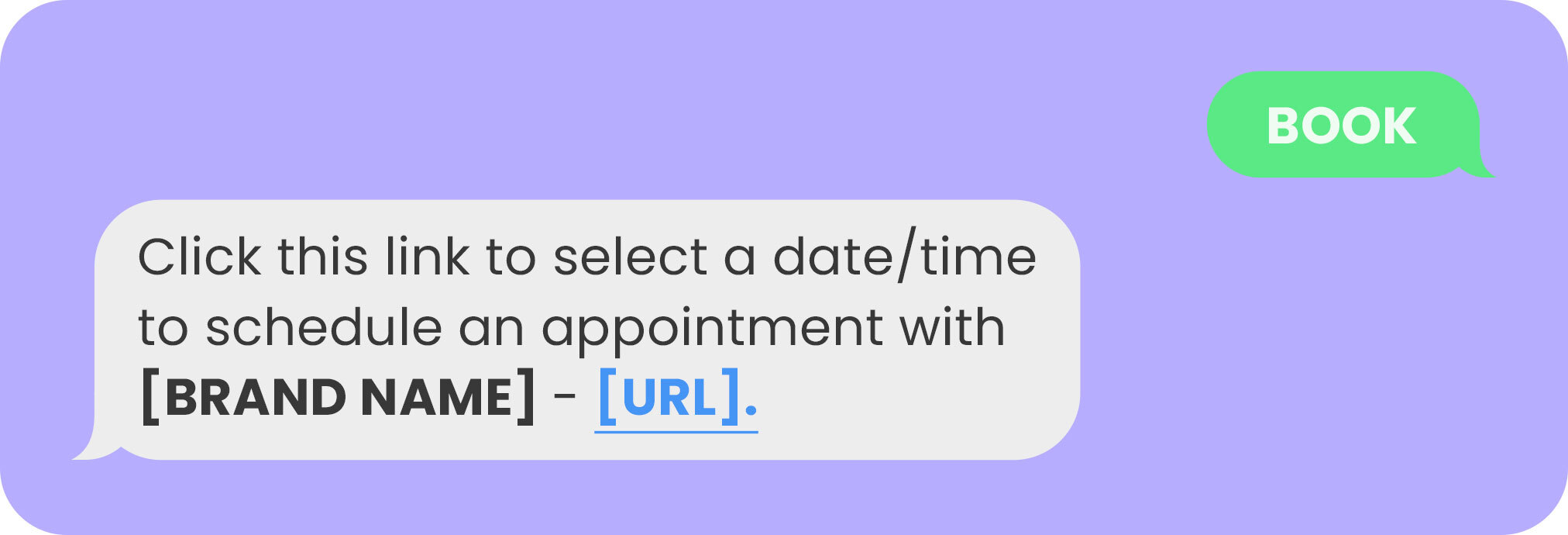
Use text keywords as a way to help your audience easily manage their schedules. You can use SMS keywords to drive users to an appointment management landing page, as well as self-explanatory keywords to reschedule or cancel existing appointments.
2. Drive sign-ups to existing marketing programs.
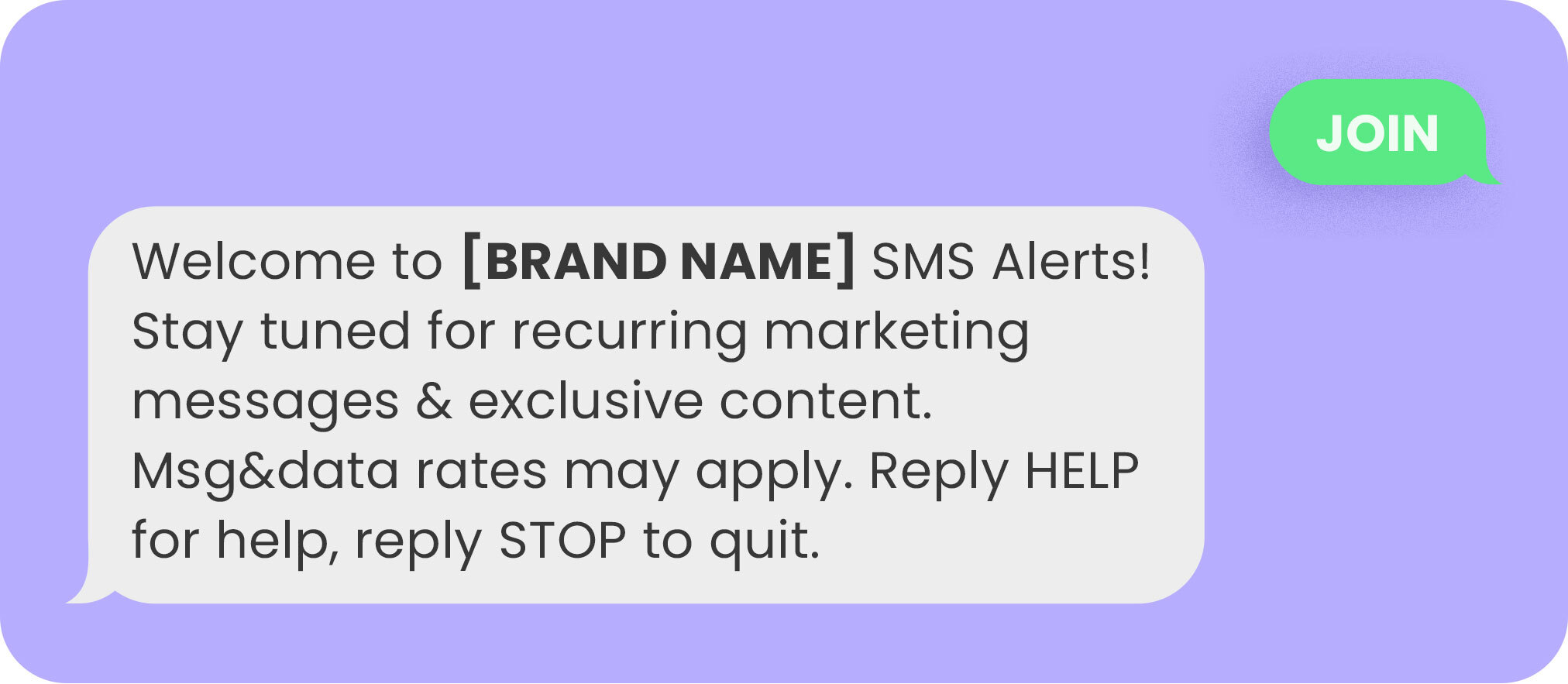
Use text keywords to boost SMS subscriber growth, or use them to enroll new customers into an existing email database or rewards / loyalty program.
3. Register for events.
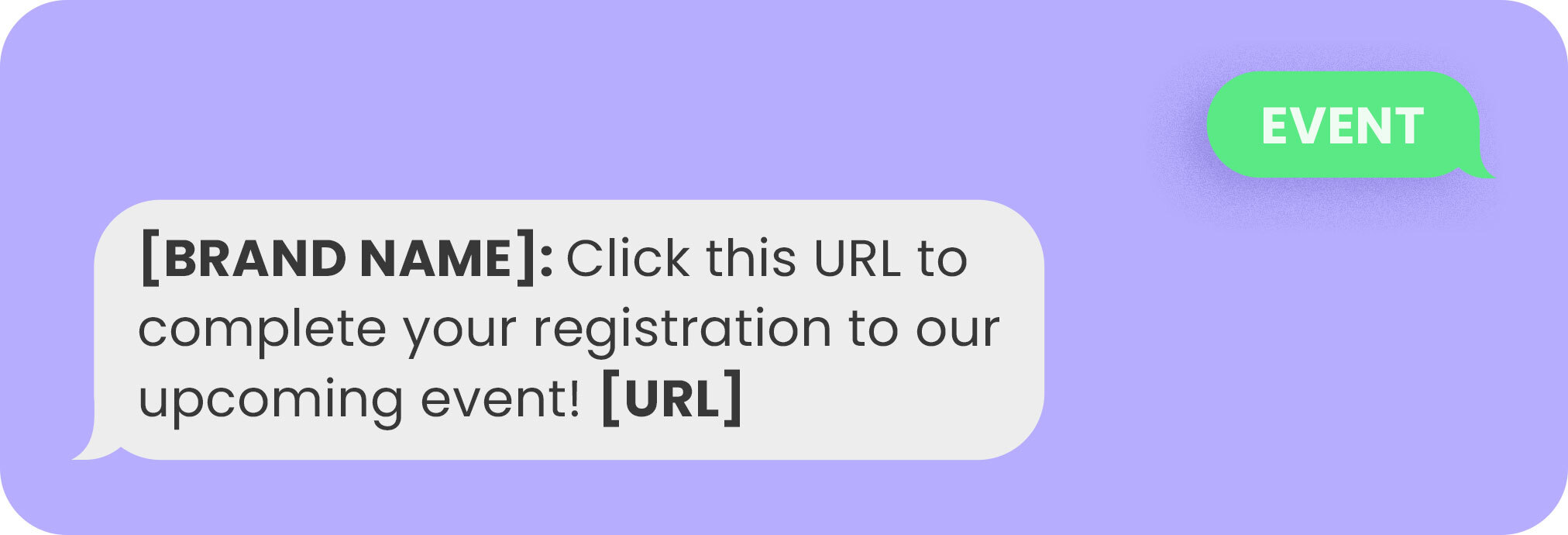
Want to make event registration a breeze? Use text keywords to allow your customers to register for an upcoming event, like a local in-store event or a webinar.
4. Deliver offers or discounts.
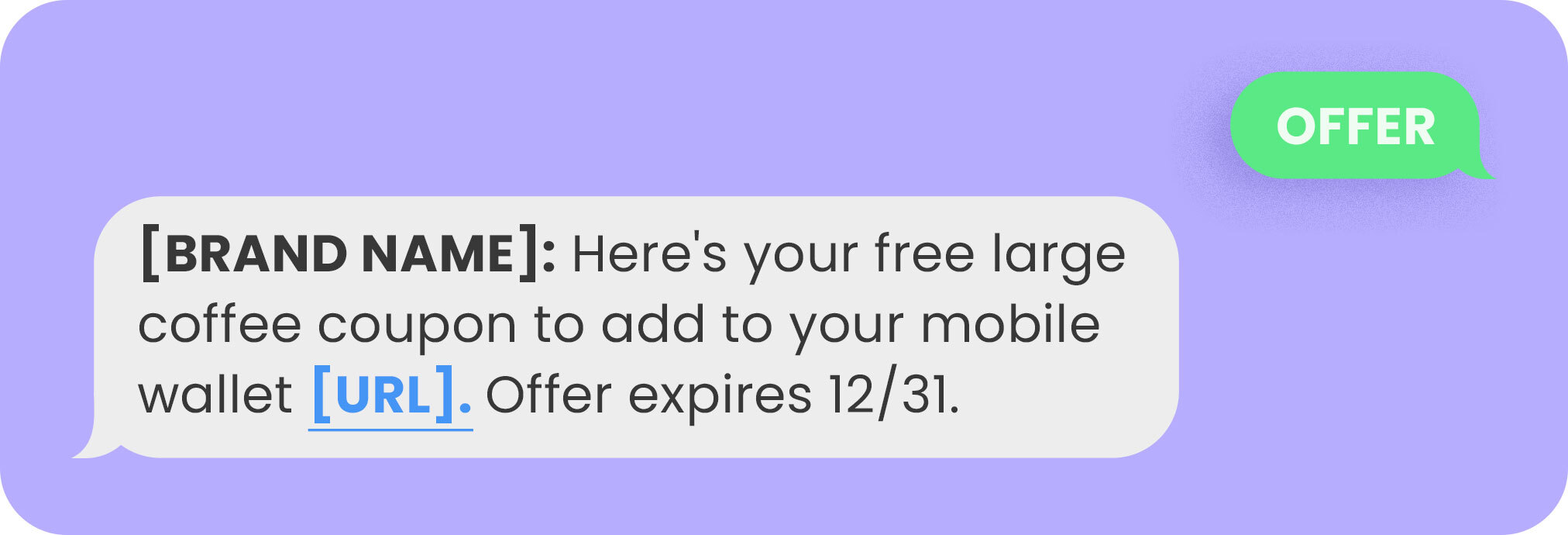
Get a brand awareness boost by using SMS keywords to spark engagement with consumers by promoting discounts or flash offers they can only get by interacting with your text keyword call-to-action.
5. Run contests or sweepstakes.
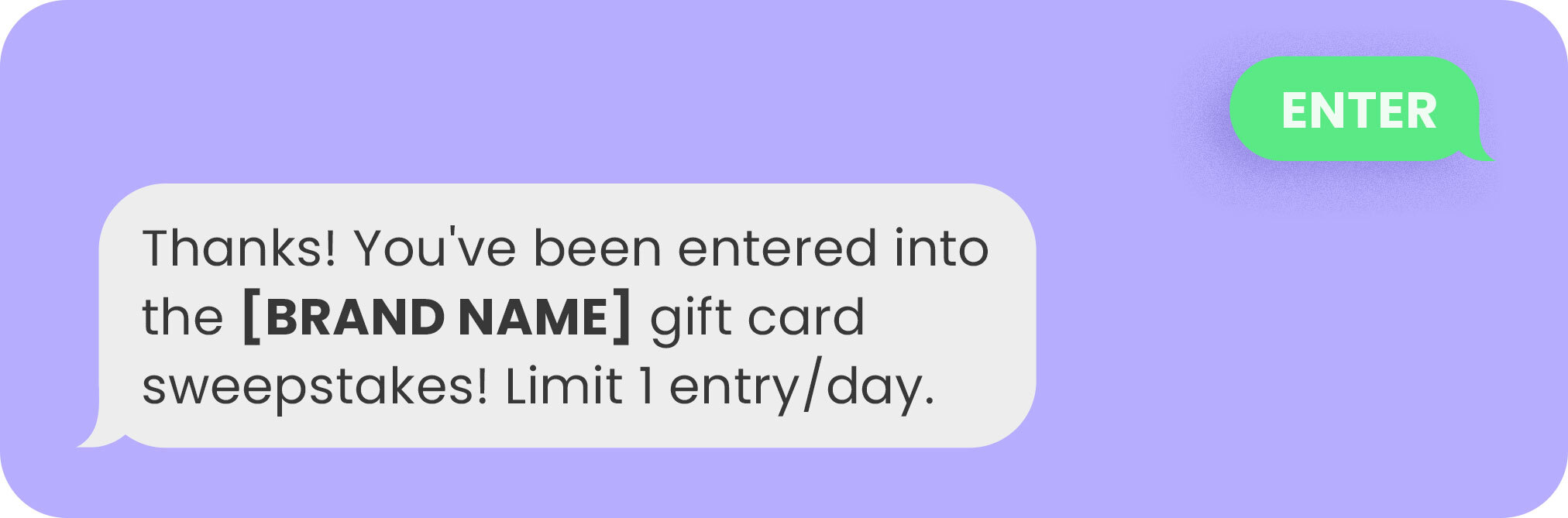
Use text keywords to boost the volume of entries into any of your contests. Fun fact: the Vibes platform makes it easy to set the logic for how you prefer to run your contest, such as how the winner(s) will be selected (e.g. winner randomly selected at the end) and how many times a contestant may enter (e.g. X times per hour / day / week / month / campaign duration).
6. Expand reach for cross-channel promotion.
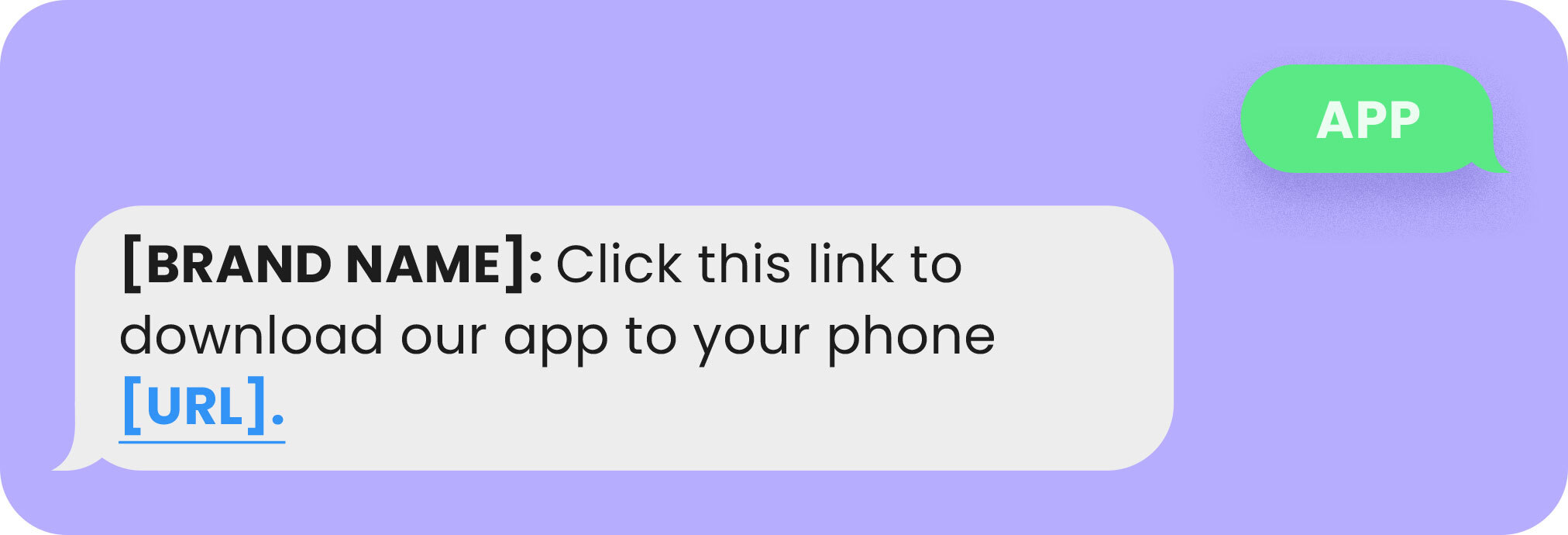
Use SMS keywords to drive more sign-ups or engagement with your other digital channels or programs, like using a text keyword to deliver a link to your mobile app in the Apple / Google app stores.
Launch Your SMS Keywords the Right Way with Vibes
Vibes has the best SMS tools and expertise in the industry, and we’ve been helping major world-class brands rapidly expand their marketable SMS databases for over 25 years.
Our service-first approach ensures we’ll help brands grow their SMS subscribers through unique keyword texting, text-to-win interactive campaigns, easy-to-enroll acquisition tactics like tap-to-join, and more. It’s no wonder Vibes customers see 25% lower churn and <1% opt-out rates of their SMS subscriber base than those who use competitors’ SMS platforms.
Final Thoughts
Text keywords are an easy and effective way to interact with your customers and keep them engaged. With this article as your guide, you’re set up to run highly impactful text keyword campaigns for any use case your business has.
Whether you need a fast and powerful start to growing an SMS subscriber base or need a steady boost in loyalty membership growth, Vibes’ mobile engagement platform makes it easy to get started.
Get in touch with us now to learn how we can help you get moving in the channel that will drive the most value for your business.