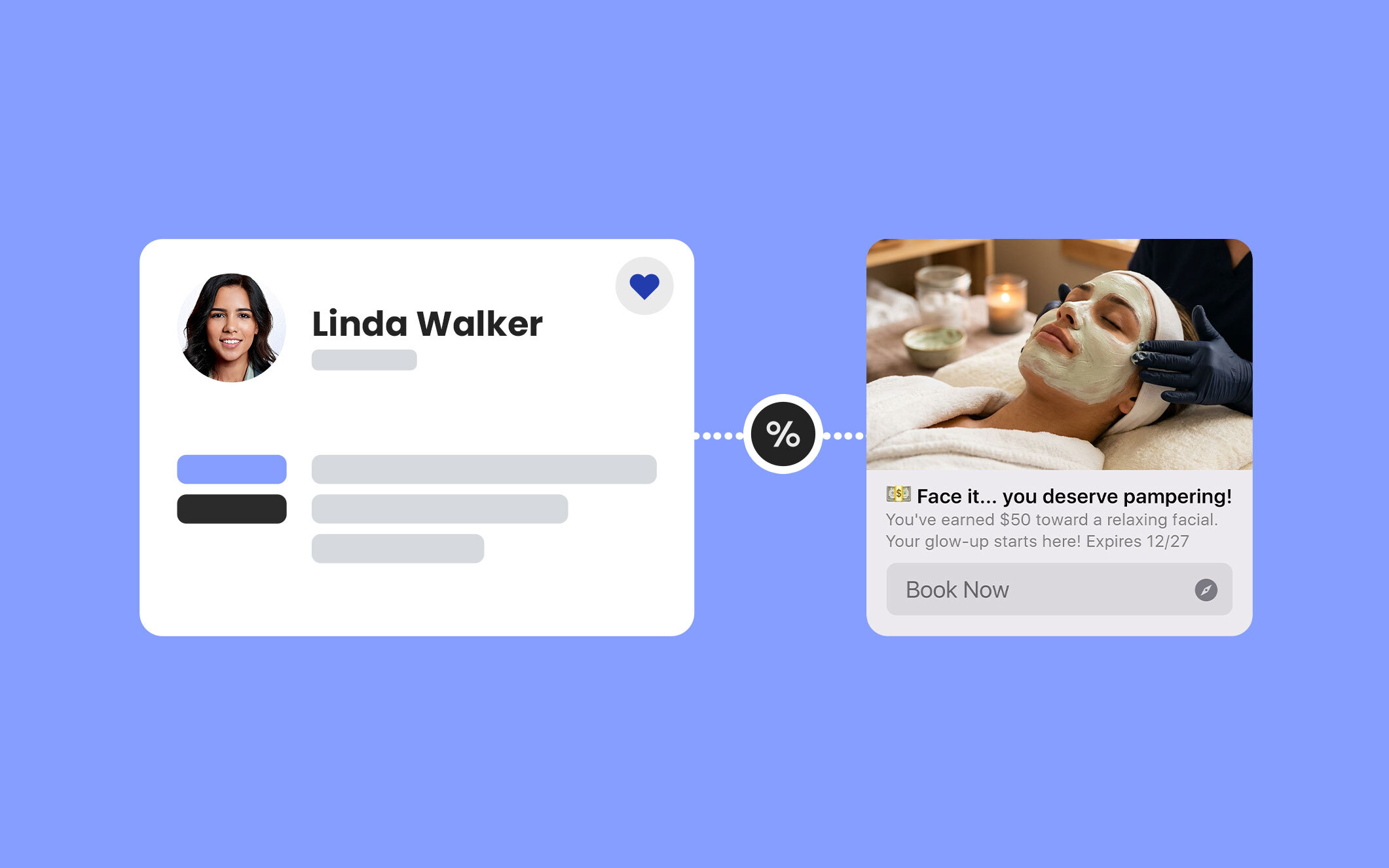

There once was a time when a business could win consumers over by having the best product and best price. While these factors are still great in today's modern age, they are no longer the only key differentiators that drive purchases. This is largely driven by the fact that today’s consumers have a lot of options when it comes to where they shop and with what brands they do business with. As a result they are more empowered to interact with you however they want and on their terms. And they also expect you to cater to their preferences.
In other words, a consumer's buying decision today is less likely to be brand-driven as it is experience-driven, which means now’s the time to invest in strategies and tools to meet consumers where they are in their buying journey to be at the top of their consideration set every time they intend to make a purchase.
The one place you can always count on reaching your customers in a hyper-personalized way is through SMS marketing.
What is Personalized SMS Marketing?
Personalized SMS marketing is text messaging that businesses send to customers that includes content tailored to the individual receiving the message.
While there are certain situations where sending the same text message to an entire SMS audience is effective, such as a retail brand kicking off their Black Friday sales, more often than not, an SMS subscriber expects messages from you that demonstrate they're being listened to and that you have an understanding of who they are.
This doesn't just mean addressing your customers by their first name - it's using elements like marked consumer preferences or behavioral data to customize SMS messages accordingly.
Why Personalized Text Messages Outperform Batch-and-Blast Sends
Personalized text messages customized to every recipient drive better engagement, conversion, and retention. How much more effective is personalized text messaging?
Drives stronger engagement.
Consumers have proven to be incredibly receptive to SMS as a marketing channel. In a recent study, 46% said they've signed up for more text messages from brands over the past year.
One factor driving this engagement is how personal a text message naturally is - we use it every day to talk to our family and friends, which drives us as consumers to look at our text messages constantly.
By using SMS messaging as a brand, you aren’t at risk of being spammy; in fact, it’s quite the opposite. The benefit of personalized SMS marketing is that it naturally fits within the intimate world that exists on the most personal device everyone is already engaging with the most, and is why Vibes customers that have leaned into a personalized text messaging strategy over generic batching-and-blasting see less than 1% opt-out rates.
Increases conversion.
That same study found that more than half of consumers who made a purchase in response to receiving a text message did so because the message was promoting a specific product or service they needed or wanted.
While other channels can offer personalized marketing, like email, text messages reach consumers instantly and grab their attention. Couple this with straightforward message copy and a URL that drives to the exact destination your customer needs to buy what they want and you've got a seamless, revenue-driving channel at your fingertips.
And the revenue impact is significant: for every $1 spent, SMS marketers worldwide generate $71 in revenue, and Vibes customers see as much as 90x ROI on just their SMS programs alone.
Improves customer retention.
An informal, generic text message can feel like nothing but noise, which is likely why 45% of consumers say they prefer behavior-based messaging over other message types.
Personalized text messages that focus on your customers' preferences and engagement history will only validate why they signed up to receive text messages from you in the first place: to receive relevant messages about things they need and want from your brand. In turn, it enables you to nurture your customer relationships and keep your brand top of mind. It's no wonder Vibes customers see 97%+ audience retention with 3+ years average audience tenure.
The Customer Data Behind Personalization
When orchestrating the use of personalized text messaging as a channel, you can curate the following customer data without risk of negative sentiment or facing privacy repercussions:
- Zero-party data. Customer information that they voluntarily offer up to you as a means of receiving more relevant content, such as survey responses, preference centers and 2-way text message interactions.
- Purchase history. What customers bought, how frequently they're purchasing, and other transaction-based data that can be collected from your POS systems or ecommerce business and integrated with your SMS software or solution provider.
- Behavioral and engagement data. From browsing behavior to clicks and redemptions, your SMS marketing platform should have this audience data available and accessible for you to easily segment and personalize text messages to your subscribers.
- Loyalty membership status. A loyalty tier, points balance and reward eligibility are just a few of many elements that change often for your loyalty members, which can be fed from your loyalty provider or software to your SMS provider to update members who are also SMS subscribers.
Six SMS Message Personalization Techniques
From targeting certain segments with location-specific offers to product recommendations, here are six different techniques that utilize customer data to effectively send personalized text messages.
Dynamic customer attributes.
Want to send unique offers, tailor seasonal messages based on a customer's specific location, or simply address each of your subscribers consistently by their first name? All of this, and more, is possible within a single message send.
Marketing automation tools make it easier than ever to use all that rich customer data you collect to personalize every text message you send. Whether the SMS platform you partner with offers different SMS templates or gives you the ability to pull customer attributes into a dynamic field within a single message, you'll have some form of personalization at your fingertips to customize the messages you're delivering to your audience.
Behavior-based triggers.
Use a customer's last activity as a flag to automatically trigger a follow-up message to drive transactions and finalize purchases, such as:
- Cart recovery. A reminder message for customers who have added items to their cart but did not complete their purchase in that visit.
- Past purchase details. Using data based on recent purchases you can, for instance, send a message highlighting items that would complement a subscriber's previous transaction.
- Browsing history. Send "while supplies last" reminders or unique product recommendations to subscribers who have viewed specific items.
- Back-in-stock. Trigger timely alerts to your customers when their favorite products are back in stock.
Reward-based messaging.
When asked, 50% of consumers said they sign up for text messages for loyalty program-related updates. This is why targeting your loyalty members who are also SMS subscribers with loyalty-specific content is a particularly effective personalized SMS marketing technique.
Use loyalty program data to send exclusive tier-based offers, points balance reminders, or other "member-only" exclusive promotions that make your most loyal customers feel even more special.
Don't have a loyalty program? Make all of your customers feel like a VIP on their special day by automatically sending them a text message with an exclusive birthday offer. You can include a unique coupon code directly in the text message or activate it through Mobile Wallet.

Location and store-level messaging.
When it comes to what consumers want brands to do most with their personal information, 48% of those surveyed said they want offers and content based on their location.
For retailers, this consumer need can be met by alerting them when their local store is having a sale. For restaurants - especially when timing is truly of the essence - you can send a timely text message based on a guest's specific time zone to ensure they receive their coupon before lunchtime.
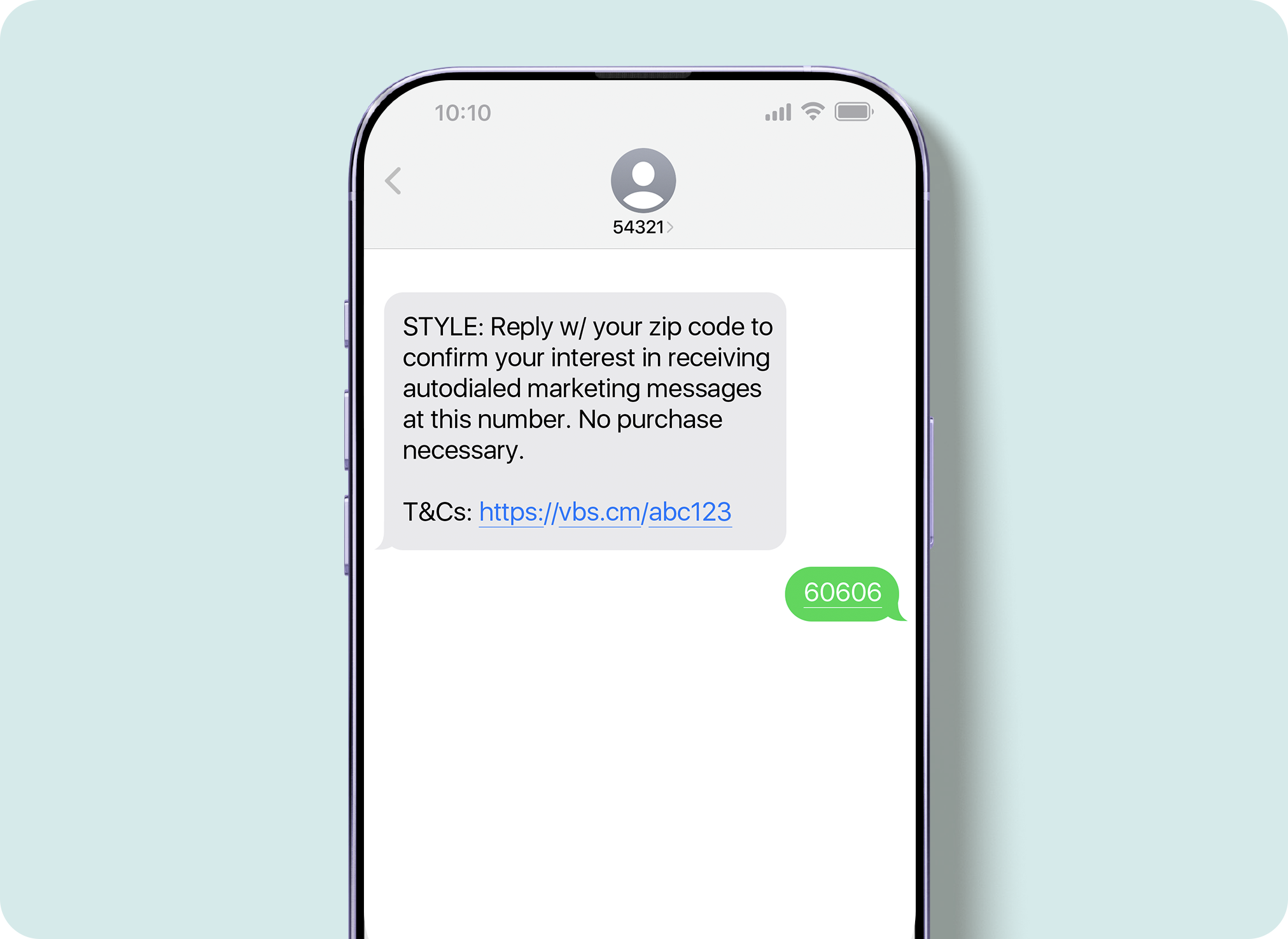
Light on location-based data for your SMS subscribers? During the SMS opt-in process, instead of asking new subscribers to reply Y try asking them to reply with their zip code. This provides you with valuable geographical information while compliantly opting them into your SMS program (more on compliance guardrails in a moment).
Lifecycle and recency segments.
Not all SMS subscribers are created equal, which is why it's important to treat - and address - new subscribers differently than your VIPs or your inactive ones. You can use activity data to target these groups appropriately, such as setting up reactivation segments to automatically trigger a personalized message from your brand after someone has remained inactive for a certain period of time.
Vibes customers with reactivation strategies typically send a strong offer or a promotion on these subscribers' favorite categories or previous purchases to further incentivize them to interact with them again via SMS.
Send-time and send-date personalization.
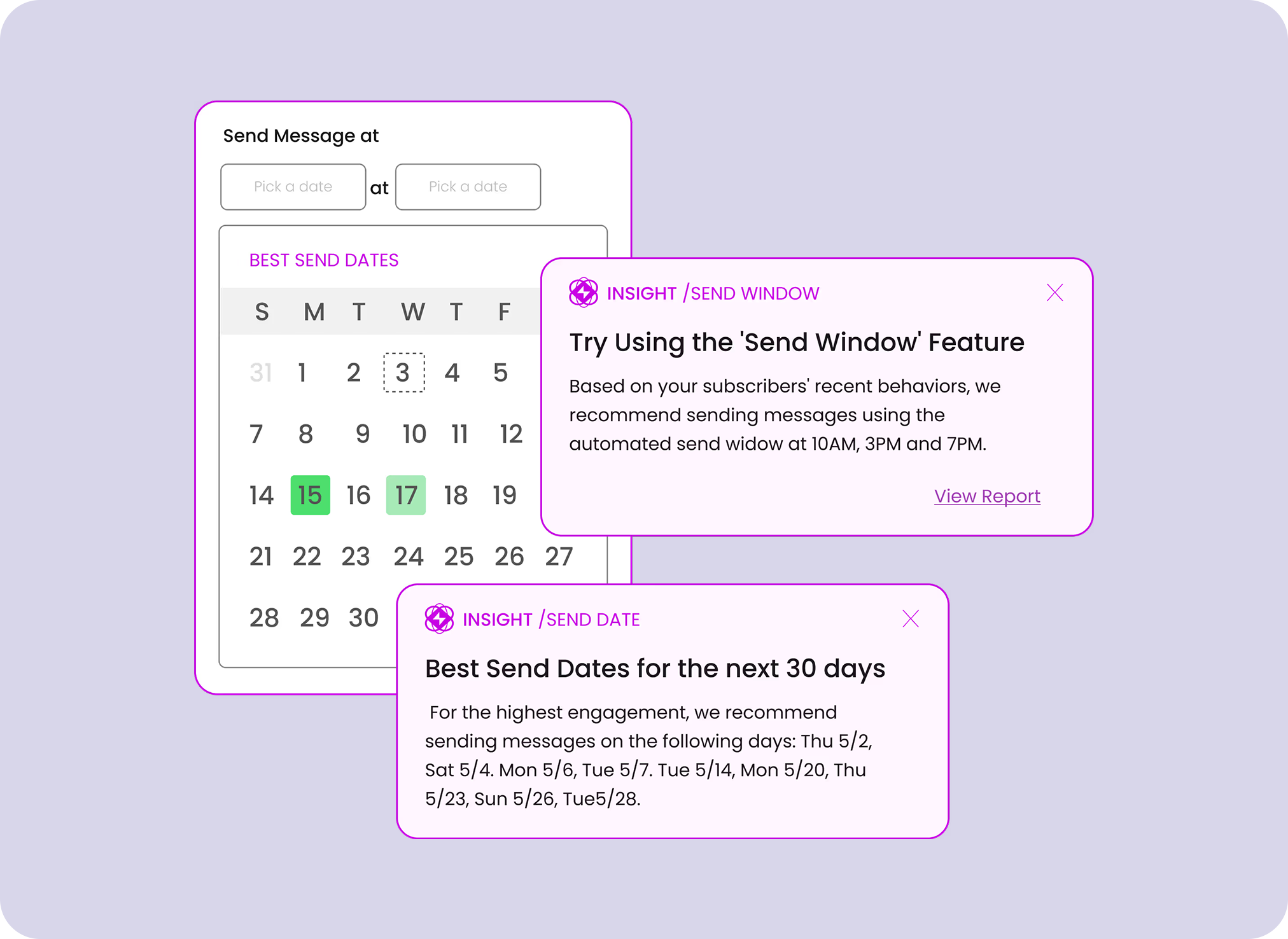
In today's world, when your messages are delivered can be as important as what's included within the message itself. In other words, sending the exact same message to subscribers but on the days or during the times they prefer can feel more personal than addressing each subscriber by their first name.
Vibes customers all receive send-time and send-date recommendations right out of the box, guiding them through strategic choices of when to send messages to their customers based on 25+ years of messaging data that shows what can improve click-through rates by up to 20%.
Personalized SMS at Scale Without Sounding Automated
Personalized SMS messages can be as delicate as they can be effective, and more available customer data doesn't necessarily mean you should start sending more messages. In fact, a recent Gartner study found that customers who experienced personalization in a recent buying journey were 2x more likely to feel overwhelmed by the volume of information they received, inhibiting them from taking the next step.
Here are a few best practices to help you avoid your personalized SMS messaging efforts from backfiring:
1. Collect customer data during the opt-in process.
Because SMS is a channel that's conversational in nature, it gives you the freedom to ask your customers questions about their preferences or prompt them for replies without them feeling like they're being interrogated.
Whether you take the approach of asking customers for some data through a text exchange or you have them sign up through a webform to capture data that way, this enables you to start personalizing message content right away.
2. Send messages by time zone.
This tactic helps to ensure that a message sent to your East Coast customers doesn't arrive 3 hours earlier for your customers out west. Not only is it important for your brand reputation that your messages are sent at appropriate times during the day, but also The Telephone Consumer Protection Act (TCPA) requires that text messages only be sent within commercial texting times, which is 8am - 9pm local to the recipient's time zone. Sending outside this window creates real compliance risk.
Platforms like Vibes offer our customers a "send by time zone" feature for every message they set up, as well as "quiet hours" functionality that automatically applies the correct window to each subscriber based on their location - helping to ensure no late-night text slips through the cracks.
3. Keep message content simple and straightforward.
Packing a text message with multiple promotions and overlaid text on top is often the recipe for a message your subscribers will ignore. Strong personalized text messages keep things clear, typically focused on one promotion and with one action to take (and keeping within 160 characters, which is the max character count for a single SMS text message).
What Changes at Enterprise Scale
Personalizing SMS messages at scale needs to take into account the following considerations.
Identity resolution.
As your subscriber list grows, managing customer records can become difficult if not handled properly. You want to partner with an SMS vendor who can help you build robust profiles and identify your customers across all channels they engage with.
Message throughput and deliverability.
The more subscribers you get, the more imperative it is to ensure every message you send gets delivered intact and on time. For brands that scale their messaging programs with no intent of slowing down, it behooves them to work with an SMS vendor that has Tier 1 direct connections across every carrier in North America.
Working with a Tier 1 aggregator, like Vibes, gives our customers the confidence that their messages reach their customers quickly and securely - no matter what.
Data latency.
Defined as the amount of time it takes for data to get from point A to point B, data latency can certainly become a concern if your tech stack isn’t built to be able to handle moving large amounts of data at once (think about the concept of driving during rush hour on a 2-lane highway vs. an 8-lane freeway). The lower the latency, the faster the delivery.
When it comes to personalized SMS messages like available rewards, order and shipment notifications, or appointment reminders, just a couple of minutes of latency can mean the difference between a good customer experience and a bad one that your customers won’t forget.
If message timeliness matters to your brand, working with a Tier 1 aggregator like Vibes is incredibly advantageous, as we have direct connections to all the US wireless carriers - guaranteeing that when a message is sent from our platform, it’s received.
Unlike other text platforms, there’s no additional company in the middle of the delivery process handling messages from all over the country, slowing processing times, causing delays, queuing, and other unseen impacts to message delivery.
Compliance Guardrails for Personalized Messaging
While SMS marketing is highly regulated, the beauty of the channel is that once a consumer has given you permission to engage with them via text messaging, you have the freedom to ask your customers questions, prompt replies, and engage with them in an ongoing dialogue.
Here are a couple of ways the SMS compliance rules benefit your personalized SMS marketing strategy.
The opt-in process.
According to the TCPA guidelines around SMS compliance, it is strongly recommended that brands who are opting customers into an SMS program have them give their consent twice before they are confirmed as subscribers to the program, which is most commonly done by prompting them through a text message to reply Y. Instead of asking your new mobile subscribers to reply Y, try asking them to reply with their zip code. This provides you with valuable geographical information while compliantly opting them into your mobile program.
Quiet hours.
The TCPA requires that text messages only be sent within commercial texting times, which is 8am - 9pm local to the recipient's time zone. Working with an SMS provider that offers "quiet hours" functionality that automatically applies the correct window to each subscriber based on their location ensures none of your subscribers receive a message from you at an inappropriate time.
How to Measure Personalized Mobile Marketing
When marketers focus on personalized mobile marketing strategies, the success metrics that matter include:
- Conversion rate: the percentage of targeted subscribers that make a purchase through the specific link they received in a personalized text message that they clicked on.
- Revenue per message: the gross revenue generated by each personalized text message you send.
- Opt-out rate: the percentage of SMS subscribers that choose to leave your mobile program at any given time.
- Subscriber tenure: the length of time an SMS subscriber stays in your mobile program.
To best measure the incremental value of your personalized SMS marketing strategies, we recommend conducting holdout tests. Comparing your personalized SMS messages with a control group will give you a clear understanding of which approaches to personalization work best with your subscribers.
If you’re testing and refining, plus using the collected data on your subscribers correctly, you should see KPIs improve significantly compared to generic, batch-and-blast sends.
How Vibes Makes Personalized SMS Marketing Achievable, At Scale
Mobile messaging has been the nucleus of Vibes’ DNA for over 25 years - all we do is reliable, compliant, high-speed mobile messaging that drives revenue for brands across SMS, RCS, and Mobile Wallet.
Working with a mobile expert like Vibes helps you build personalized SMS marketing at scale in the following ways.
- Clean, compliant, carrier-approved messaging. We’re directly connected to all North American wireless carriers, plus we have compliance guardrails directly integrated into our platform that ensure every message sent complies with the industry’s rules, saving you from being audited and slowing down your personalized messaging campaigns.
- The ability to elevate customer experiences with RCS. We made RCS central to our mobile engagement platform from day one of its arrival in the US. As a result, we’ve launched more RCS agents than any other direct connect aggregator in North America and have the fastest, most complete RCS launch process in the industry.
- Robust suite of public APIs. We make it incredibly easy to bring enterprise-grade SMS, RCS, Mobile Wallet, advanced analytics, and more into the tools your team already relies upon, saving you time in building customer journeys and allowing you to create thousands of different message automations.
- Mobile Wallet distribution. The most engaged buyers have proven to be on their smartphones, and they love using Apple Wallet / Google Wallet that’s native to their device for digital coupons, offers, and loyalty cards. Marketers see 19x more revenue per message from campaigns that use both SMS + Mobile Wallet vs. those just sending SMS messages by themselves, seeing boosts in foot traffic to physical locations as a result.
Get in touch to learn more about how we can help you launch data-driven personalized SMS marketing for your business.
The Bottom Line
To make your SMS marketing strategy relevant and effective, it’s vital to centralize it around customer data. Connecting the necessary platforms and software solutions that allow you to easily transfer data and distribute relevant information is essential when personalizing text messages to your subscribers.
FAQs
What is personalized SMS marketing?
Personalized SMS marketing uses customer data to create messages with more relevant content unique to the subscriber who receives the message. The customer data can be demographic-based data like first name or location, or behavior-based data like last activity or past purchases.
How do you personalize a text message?
The most effective way to personalize a text message is to connect your customer data system of record with your SMS provider so that the relevant data can flow between systems to enable your personalized campaigns.
How do you personalize bulk SMS without sounding automated?
By making sure the content sent to every individual subscriber is relevant to them. This can be achieved by basing your personalized SMS campaigns on elements including your CRM data, time-based triggers, and ensuring a message does not go out at inappropriate times of the day.
Is personalized SMS marketing compliant with TCPA and CTIA?
Yes, as long as you abide by their rules and regulations regarding explicit, written opt-in consent, honoring a subscriber’s opt-out request through any reasonable means, and limiting messages to commercial texting times (8am-9pm local to a recipient’s time zone).
The Vibes platform helps our customers stay compliant with built-in guardrails for real-time opt-in/opt-out management, send-time management, message frequency management, and more.
What is the best SMS marketing platform for enterprise brands?
The best SMS marketing platform for enterprise brands is one that’s proven to be a reliable messaging aggregator, is well-versed in SMS compliance, can prove how it handles data protection & privacy, and one that’s built to be able to easily integrate with tools you’re already using.