If you’re in the hospitality industry, you’re likely working on ideas and solutions to solve for stagnant growth as higher prices weaken demand across a diverse audience - from new leads to your most loyal guests.
One of the defining trends shaping your industry audience is the ongoing, rapid rise of AI, which is helping deliver more personalized guest experiences. While AI is claiming to also be the solution you need to optimize your business, the uncertainties and layers of “slop” that can accompany it may be met with some skepticism. But fear not - there’s a proven solution out there right now that answers both the rising guest demand and your needs at the same time: RCS messaging.
With results showing up to a 93% increase in revenue vs. SMS, RCS creates an elevated, conversational experience that naturally leads to increased conversions and revenue, and Vibes’ RCS Studio tool can get you launched and sending RCS messages in a matter of minutes.
What is RCS for Hotels?
RCS (Rich Communication Services) is the next evolution of SMS, delivered natively in the mobile phone’s default messaging app. For example, with RCS, guests interested in booking new accommodations could achieve this all through the message chain instead of having to download an app. RCS innovations include, but are not limited to:
- Verified branding via a built-in contact card with property name, logo and brand colors
- Interactive buttons for one-tap actions to book a hotel, confirm booking details, browse on-site services/activities, etc.
- Beautifully rich images and videos
- Time-saving actions, such as location sharing and maps
- Deeper engagement tracking, including messages delivered, reactions and clicks
Why RCS is a Strong Fit for Hotels and Hospitality Businesses
With the need for both promotional and service-oriented messaging, RCS messaging delivers on its promise of being a seamless guest communication channel. It combines the reach of text messaging with the rich, interactive experiences guests expect from modern apps - no downloads, no logins, no friction.
Not only does RCS raise the bar on guest experiences, but its abilities - such as automating check-ins or scheduling room cleanings - also have the power to improve the efficiency of your operational workflows. Other reasons RCS is a strong fit include:
- Improved issue resolution. With RCS, quick questions can be answered almost instantly instead of waiting on hold to speak with a live person.
- Personalized experiences the guest wants. RCS helps hotels build rapport and a relationship with your guests early on, personalizing messages that are related to their interaction - or lack of interactions - with your business.
- Elevated trust. When guests book a room at a resort, RCS messages include all branding and personalization to ensure that guests have a fantastic experience from the moment of booking to the time they leave the property.
Benefits of RCS Over SMS, Email, and Hotel Apps
RCS turns messaging into a true guest experience channel - let’s compare how.
RCS vs. SMS for guest communication
There are a number of key features only offered by RCS, including:
- “Verified sender” branding that builds trust and reputation
- Suggested action buttons users can engage with in just one tap (e.g. Dial a Number, View Location, Create Calendar Event, etc.)
- Rich cards that can provide images, videos and more detailed information, and carousels of up to 10 rich cards that users can scroll through
- Read receipts including timestamps

RCS vs. email for time-sensitive hotel interactions
As consumer behavior and interactions with businesses began shifting to their mobile devices, email messages have a much lower chance of getting through to your guests. Some risks associated with email to consider that RCS alleviates:
- Email is a high-risk channel for spam filtering, effectively reducing your deliverability rates.
- Crowded email inboxes make it more difficult to build engagement in a timely manner. And for the emails that do get opened, the average email response time is about 12 hours.
- eMarketer reports that consumers name email as the most overwhelming marketing channel, which is not exactly the right sentiment when action may be needed.
RCS vs. apps for convenience and reach
There are a few key benefits RCS has over mobile apps.
- RCS requires no additional download to use. Only your most loyal and engaged guests are the ones taking the steps to download your app. RCS, on the other hand, is not only available on all Android devices and all iPhone X models and above with iOS 18 or above, but it’s also enabled by default because it comes through the native messaging app.
- No development time required to launch RCS. Unlike a mobile app that needs to be built out or integrated via an SDK, RCS being built directly in the native messaging app means no development work is needed to start using RCS as a messaging channel.
- RCS provides a frictionless customer experience. While apps have push messaging, that’s just a means of getting users into your app to then interact with you further. RCS offers both the messaging and interactivity that your guests expect from a mobile app today - allowing them to scroll through room inventory, manage their bookings, upgrade their trip, and more.
7 Best Use Cases for RCS in Hospitality
Here are several use cases primed for RCS (and why this should excite you if you’re in the hospitality industry).
1. Booking assistance and confirmations.
Just imagine how useful it’d be if you could send potential guests a carousel of images of your available hotel room options. Plus, pairing each carousel with single-tap “Book Now” buttons makes it incredibly easy for guests to book the room they want for their upcoming trip.
RCS can also deliver personalized updates during the hotel booking process, such as triggered reminders to complete a booking that didn’t make it across the finish line.
Additionally, customer care support through RCS makes it easy to resolve questions regarding booking or check-in status.
2. Lead nurture messaging.
RCS enables you to build and maintain a steady connection during the sales cycle in a creative, non-intrusive way. For instance, you can send a carousel of featured videos of on-site services/activities or special offers on tours that the user can swipe through.
You can also easily target any promotional RCS content based on a user’s engagement behavior.
3. Pre-arrival messaging.
Question about check-in times? Have a special room request like a high floor or extra bedding? RCS makes all of this not only possible for your guests, but also helps to solve potential issues faster within the RCS chat - especially because it can eliminate toggling between a messaging app, a web browser, and a mobile app.
4. On-site messaging and ancillaries.
From available upgrade prompts to managing an existing reservation, RCS has several key features it offers that are built right into the solution (i.e., no custom tech integration work required). For instance:
- “View location”, which is natively integrated with the phone’s maps application, makes it easy for your customers to get directions to your hotel.
- “Dial a number” is also built in, and a helpful option if a guest has a question that they simply want to speak to a human about. RCS ensures they have a direct line of communication to you when they need it.
- Another built-in feature, “Add to Calendar,” makes it easy for guests to add an upcoming appointment to their calendar - a good action to consider for guests who have booked excursions or made dining reservations through you.
- Map links and check-in buttons make the online-to-on-site experience seamless, mimicking an experience users have with a mobile app without the additional download.
5. Concierge servicing messaging.
RCS makes staying connected and handling special requests easier than ever before, especially when the messages can be personalized to each individual. RCS offers a more streamlined communication experience on things like:
- In-room amenities and dining recommendations, inclusive of visuals
- Transportation and logistics notifications
- Itinerary planning that can offer personalized recommendations for dining, events, sightseeing and other unique experiences
The interactive features, like read receipts and typing indicators, also aid in providing a superior customer service experience because your guests are seeing when you are writing a message back to them, recognizing that you are actively working to assist them.
6. Post-travel engagement.
RCS makes staying connected beyond the sale easier than ever before, especially when the messages can be personalized to each individual on topics like:
- Upgrade incentives for repeat bookings
- Special sales promotions and other key details you only want repeat guests to know about
- Post-stay surveys that can not only ask for input, but also follow up with the guest when their suggestions have been implemented
7. Loyalty program enrollment.
With a single, tap-to-enroll button, RCS makes it simpler than ever for guests to enroll in your loyalty and credit card programs.
Plus, RCS can seamlessly integrate with Mobile Wallet, another channel that’s native to smartphones for housing digital loyalty cards.
What Hospitality Teams Need Before Launching RCS
There are a few elements to consider as you prepare to launch RCS messaging.
Determine your messaging aggregator.
RCS messaging requires working with a messaging aggregator, and like any industry, not all aggregators are created equal.
Tier 1 aggregators like Vibes have direct carrier connections that give brands unmediated access to faster RCS agent registration and quicker, compliant campaign approvals, which is how we launched more RCS agents in Q4 2025 than any other direct connect aggregator.
Have an SMS fallback strategy.
While RCS is close, it’s not a universal channel in the US yet. That’s why it’s important to think about the experience for non-RCS-enabled guests and work with a messaging platform that enables logic between RCS-enabled and non-RCS-enabled devices - allowing you to set up a fallback message that the non-enabled devices can accept.
Submit your RCS agent request to get your brand verified.
RCS is run through a separate agent that uses the RCS protocol to send and receive messages on your behalf and becomes the face of your brand’s verified messaging profile. Here’s a high-level overview of the steps you’d take to complete this process:
- Submit your agent request by providing some key brand and program details via an RCS agent registration form.
- Once submitted successfully, your agent gets created in the Google Business Messaging ecosystem.
- Get your brand verified with the third-party verification platform, Aegis, to validate the brand you submitted belongs to the proper owner.
- Once verified, your agent is submitted to the wireless carriers for approval to launch in market.
Determine your various use cases.
From two-factor authentication requests to highly sophisticated rich media messages, RCS offers a centralized hub to meet a wide variety of guest needs.
Not sure where to start? Consider this level-step approach that keeps things simple and ramps up customer adoption with ease.
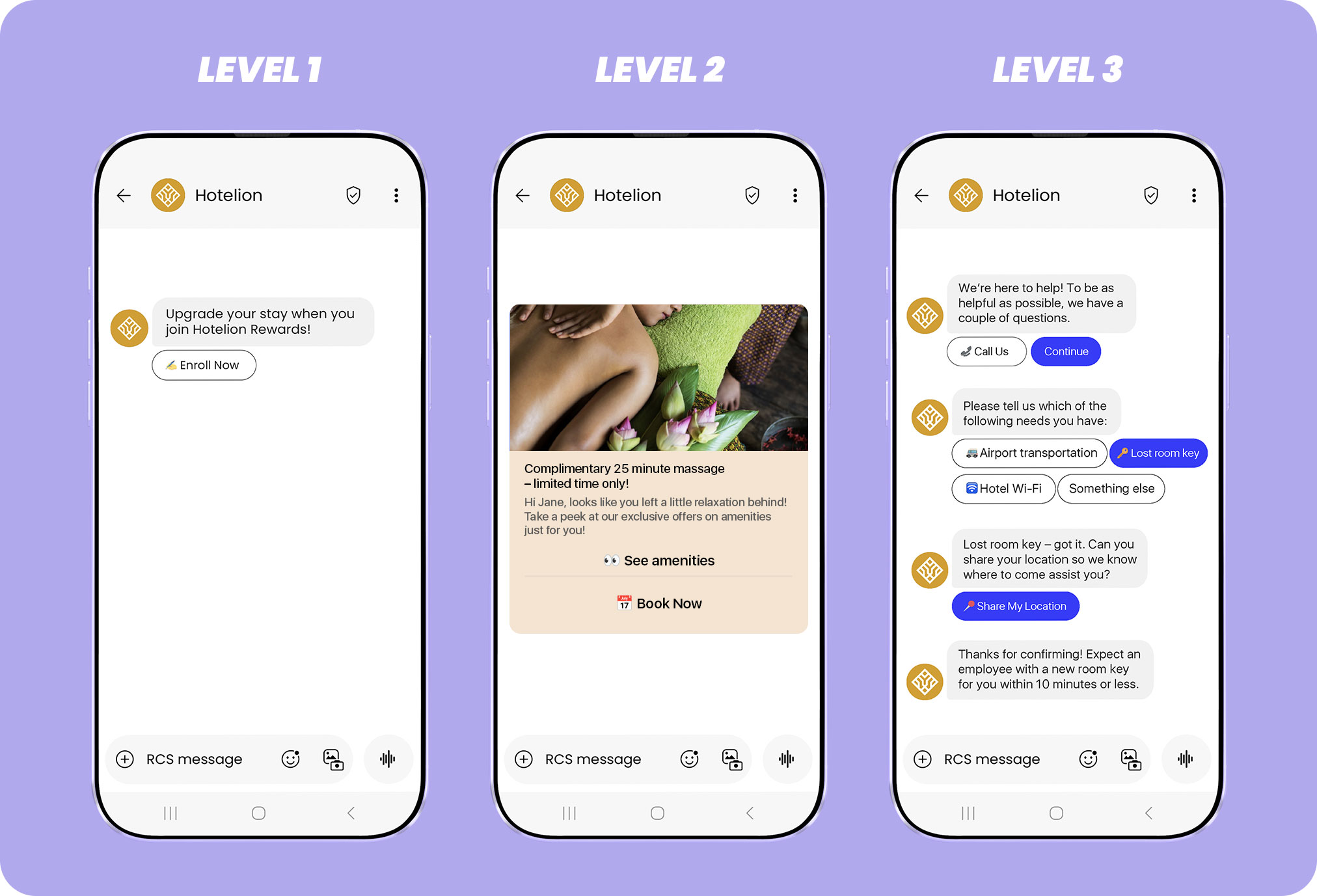
- Level 1: upgrade your SMS program to RCS to receive access to a verified branded agent.
- Level 2: use more RCS features to improve guest engagement vs. SMS/MMS.
- Level 3: convert your web and app flows to true conversational RCS and allow frictionless marketing through to long-lasting guest loyalty, with no app required.
Send your First RCS Message in Less Than 5 Minutes with Vibes RCS Studio™
Launch speed of new technology is critical for the hospitality industry for three key reasons:
- The steadily rising consumer demand for more convenience
- Operational costs continue to grow
- The competition to earn guest loyalty is more intense than ever before
But when it comes to launching new innovations, often that comes with lengthy timelines and cumbersome processes. RCS is no different in that setting it up for your business can be complex - but Vibes fixed that with RCS Studio™. How?
Launching RCS messaging usually means working with multiple vendors, waiting on carrier provisioning timelines, and navigating compliance requirements over the span of several months. RCS Studio™ removes these common launch barriers by offering an automated, streamlined provisioning process.
Once you submit an agent request, RCS Studio™ handles the rest in one simple, secure interface. Within 5 minutes of that submission, your RCS agent will be built and ready to begin sending RCS messages.
Built for both a technical and non-technical audience, RCS Studio™ is a turnkey solution that handles RCS agent creation, provisioning, compliance, and carrier delivery - all in one place, and all on behalf of the user.
It is also designed for both technical and non-technical users to easily build RCS agents and conversational flows without writing any code.
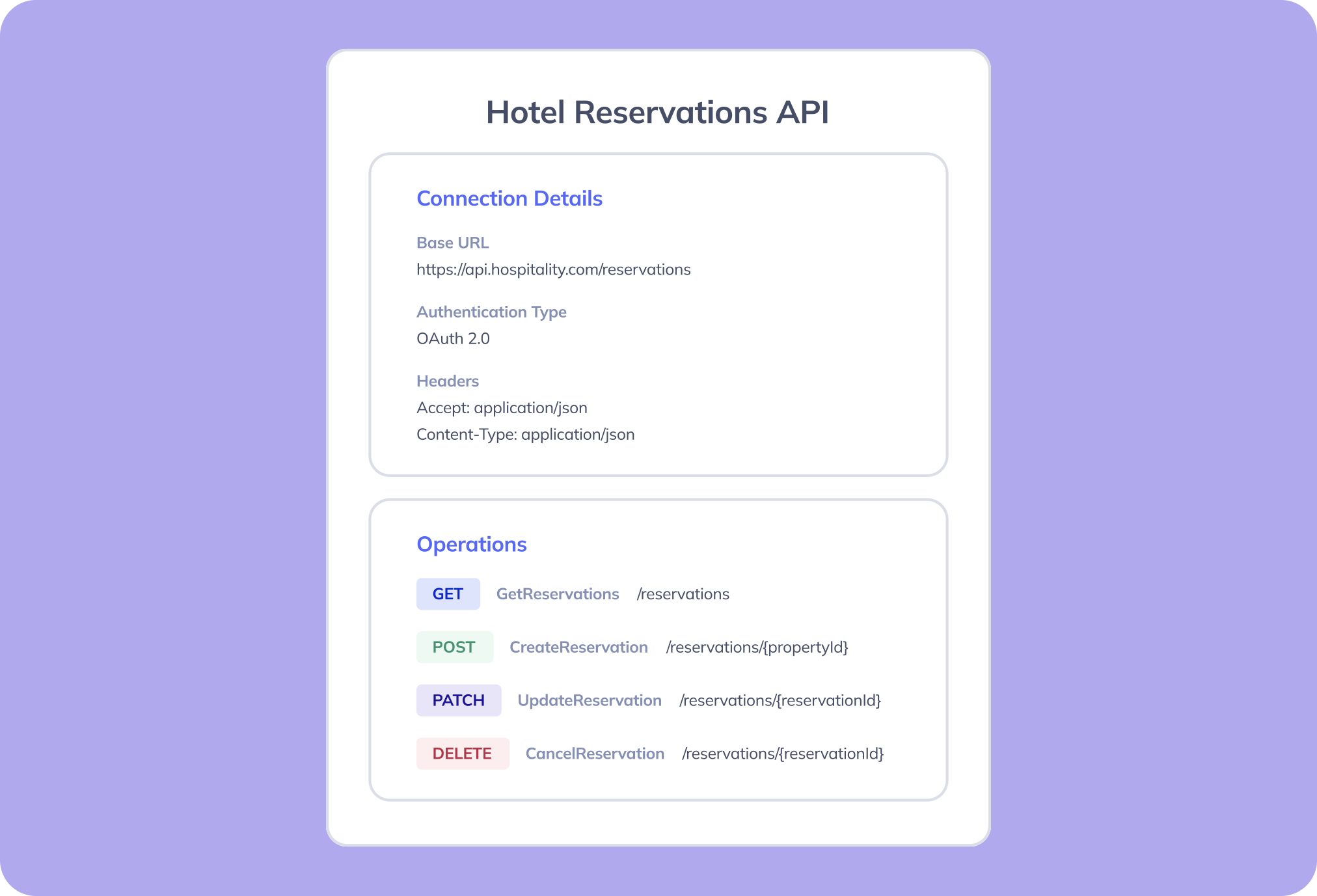
And when it comes to integrations, developers can rest easy: RCS Studio™ makes complex integrations simple by offering a connector library that’s packed with low code/no code connections to your internal and external APIs from a wide library.
FAQs About RCS Messaging for Hotels
What is RCS marketing for hotels and hospitality?
When it comes to powerful technology for the hospitality industry, RCS marketing serves as a premier solution to elevate guest interactions and enable a frictionless journey pre-, post- and in-travel. It gives hotels and hospitality brands the ability to reach more potential guests through their preferred communication channel, while giving you more visibility into the engagement funnel via more in-depth information about the status of messages, such as read receipts, interaction timing, reactions, multimedia element engagement, and more. This information enables hyper-personalized messages for more effective campaigns.
How can hotels use RCS messaging?
Here are just a few examples of how hotels can use RCS messaging to streamline the guest journey from awareness to long-lasting loyalty:
- With its conversational nature and deeper customer data visibility, RCS makes targeted promotions easier than ever before.
- The rich media aspect of RCS captures the attention of potential guests more easily, allowing hotels to showcase new accommodations or resorts.
- Hotels can use RCS to visually showcase appealing destination guides, promote special offers, and enable seamless bookings and trip updates all directly within the guest’s native messaging app.
Is RCS better than SMS for hotels?
Although RCS has the potential to replace SMS in the near future, we don’t recommend thinking about one channel being better than the other. Rather, it’s about one channel possibly being a better fit than another depending on the use case.
Read our RCS vs. SMS article for guidance on which channel may be a better choice to consider for a specific situation.
Can hotels use RCS for check-in and upgrades?
Yes, RCS can facilitate smoother, timely guest interactions, just like the ability to check-in or upgrade their accommodations.
Do guests need an app to receive hotel RCS messages?
No, RCS messaging takes place entirely within a user’s native messaging app. This makes communication more dynamic and helps drive higher engagement and stronger guest loyalty by creating a more seamless, app-like experience without requiring a separate app download.
What happens if a guest’s phone does not support RCS?
If an RCS agent attempts to send a message to a user who does not have an RCS-enabled device, the RCS aggregator you partner with should have logic enabled in their platform to easily set up the SMS fallback experience.
How can hotel teams get started with RCS quickly?
Vibes has you covered. We’ve recently launched RCS Studio™, the turnkey provisioning, compliance, and management platform that allows dealerships to join the RCS revolution right now. Technical and non-technical users can create their first RCS messages and launch them to devices in less than 5 minutes.
The Bottom Line
There’s no denying it: RCS is built to drive overall guest satisfaction. Compared to SMS, email, and mobile apps, RCS offers richer, more interactive experiences — such as verified branding, multimedia content, one-tap actions, and more — that help hotels personalize communication, streamline operations, and increase conversions across the guest journey.
With Vibes’ RCS Studio™ platform we’ve removed every barrier to launch, making what’s typically a complex launch process simple - enabling you to create rich, elevated messaging experiences quickly without requiring heavy technical resources.
Get in touch with Vibes today to learn how we can help drive your business forward in the modern hospitality world.